

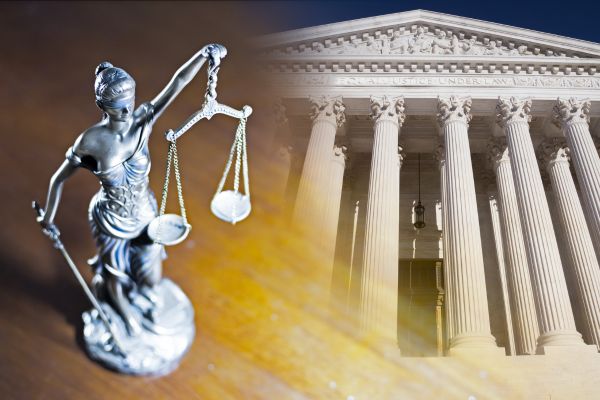
Why Landmark Supreme Court Cases Still Shape Daily Life
The United States Supreme Court can feel distant from ordinary life. Its hearings happen far from most people’s homes, its opinions are written in formal language, and its decisions often arrive wrapped in legal terms that are not easy to digest. Yet landmark Supreme Court cases have shaped how Americans go to school, speak freely, interact with police, vote, marry, receive legal defense, and challenge government power.
These cases matter because they do more than settle one dispute between two sides. They explain what the Constitution means in real situations. Sometimes they expand rights. Sometimes they limit government action. Sometimes they correct earlier mistakes, and sometimes they create debates that last for generations. Understanding landmark Supreme Court cases is one way to understand how American law grows, struggles, and changes over time.
Marbury v. Madison and the Power of Judicial Review
Marbury v. Madison, decided in 1803, is one of the most important cases in American constitutional history. The case is remembered because it established the principle of judicial review, meaning the Supreme Court can declare government actions unconstitutional when they conflict with the Constitution.
Before this decision, the Court’s role was still developing. The Constitution created the judicial branch, but Marbury helped define its authority. Chief Justice John Marshall’s opinion gave the Court a powerful place in the balance among the three branches of government.
The case itself involved a political dispute over a judicial appointment, but its lasting importance is much larger than the original conflict. It turned the Supreme Court into a constitutional referee. Without Marbury, many later landmark Supreme Court cases would not have carried the same weight.
Plessy v. Ferguson and the Damage of “Separate but Equal”
Plessy v. Ferguson, decided in 1896, is often studied as an example of how the Supreme Court can also get things deeply wrong. The case upheld racial segregation under the doctrine known as “separate but equal.” In practice, that phrase gave legal cover to segregation across public life, especially in the South.
The decision allowed states to separate people by race in public facilities, while claiming that equal treatment was still possible. The reality was far different. Segregated schools, transportation, neighborhoods, and institutions were almost never equal. The case became a symbol of legalized racial inequality.
Plessy matters because it reminds us that Supreme Court decisions can shape society for better or worse. It also shows why later correction was necessary. The Court’s authority is powerful, but history has shown that power is not automatically the same as justice.
Brown v. Board of Education and the End of Legal School Segregation
Brown v. Board of Education, decided in 1954, directly challenged the logic of Plessy. The Supreme Court ruled that racial segregation in public schools was unconstitutional, rejecting the idea that separate educational facilities could truly be equal.
This was not just a school case. It became a turning point in the civil rights movement. Brown recognized that segregation harmed children and denied them equal protection under the law. It also forced the country to face the contradiction between constitutional promises and daily reality.
The decision did not end segregation overnight. Resistance was strong, and implementation took years. Still, Brown changed the legal foundation of American education and public equality. It remains one of the clearest examples of how landmark Supreme Court cases can reshape national life.
Gideon v. Wainwright and the Right to a Lawyer
Gideon v. Wainwright, decided in 1963, focused on a basic question: can a person receive a fair criminal trial without a lawyer? The Supreme Court held that the right to counsel is fundamental, and that states must provide attorneys for defendants who cannot afford one in serious criminal cases.
The facts behind the case were simple but powerful. Clarence Earl Gideon was charged with a crime and asked for a lawyer. He was denied one because, under state rules at the time, counsel did not have to be appointed in his type of case. He represented himself, was convicted, and later challenged the conviction from prison.
The Court’s decision changed criminal justice across the country. Gideon did not make the system perfect, but it made clear that fairness in court cannot depend entirely on a person’s bank account. The right to defense became more than a phrase; it became a practical constitutional requirement.
Miranda v. Arizona and the Rights of Suspects
Miranda v. Arizona, decided in 1966, is one of the few Supreme Court cases whose impact many people recognize from everyday culture. The familiar warning about the right to remain silent and the right to an attorney comes from this decision.
The case centered on police interrogation and the Fifth Amendment protection against self-incrimination. The Supreme Court held that prosecutors generally cannot use statements from custodial interrogation unless certain procedural safeguards are followed.
Miranda changed how police departments handle questioning. It also made constitutional rights more visible to ordinary people. Before Miranda, many suspects may not have understood that silence was an option or that they could ask for a lawyer. The decision helped bring those rights out of legal textbooks and into real police stations.
United States v. Nixon and Limits on Presidential Power
United States v. Nixon, decided in 1974, came during the Watergate scandal and tested the reach of executive privilege. President Richard Nixon argued that he did not have to turn over certain recordings. The Supreme Court disagreed, holding that executive privilege exists but cannot be used to block evidence needed in a criminal prosecution.
This case is important because it made a plain constitutional point: even the president is not above the law. The decision strengthened the idea that courts can require accountability from the highest levels of government.
United States v. Nixon remains one of the major landmark Supreme Court cases involving separation of powers. It showed that presidential authority is real, but not unlimited. In a constitutional system, power must answer to law.
Obergefell v. Hodges and Marriage Equality
Obergefell v. Hodges, decided in 2015, addressed whether states must license and recognize same-sex marriages. The Supreme Court held that the Fourteenth Amendment requires states to allow same-sex couples to marry and recognize their marriages.
The case was about marriage, but also about dignity, equality, and personal liberty. For same-sex couples, the ruling affected family security, inheritance, hospital visitation, parenting rights, taxes, and social recognition. It turned a patchwork of state laws into a nationwide constitutional rule.
Obergefell also remains a debated decision, especially among people who disagree about how courts should interpret the Constitution. That debate is part of why it is considered landmark. It did not merely answer a legal question; it changed public life.
Dobbs v. Jackson Women’s Health Organization and a Major Shift in Constitutional Law
Dobbs v. Jackson Women’s Health Organization, decided in 2022, became one of the most consequential modern Supreme Court decisions. The Court held that the U.S. Constitution does not confer a right to abortion and returned authority over abortion regulation to the people and elected representatives.
The decision overturned Roe v. Wade and Planned Parenthood v. Casey, two earlier cases that had protected abortion rights at the federal constitutional level. Dobbs immediately changed the legal landscape, making abortion law depend heavily on state legislation.
Whether one agrees or disagrees with the outcome, Dobbs is clearly a landmark case because it reshaped constitutional interpretation, state authority, and personal rights. It also showed how Supreme Court decisions can reopen questions many people believed were settled.
Why These Cases Continue to Matter
Landmark Supreme Court cases are not frozen in history. They continue to influence new disputes, public policy, and everyday rights. A school case from the 1950s can shape modern equality debates. A police interrogation case from the 1960s can affect a person arrested today. A case about presidential recordings from the 1970s can still guide arguments about executive power.
These decisions also reveal something important about American law: it is not static. Constitutional meaning develops through conflict, interpretation, and public pressure. Some rulings become celebrated. Others become warnings. A few do both, depending on who is reading them and when.
That is why studying these cases is not only for lawyers or students. It helps ordinary people understand where their rights come from, how government power is limited, and why courts matter.
Conclusion
Landmark Supreme Court cases explain more than legal doctrine. They tell the story of a country working through its hardest questions: equality, liberty, fairness, power, punishment, privacy, and human dignity. Some decisions pushed the nation closer to its constitutional ideals. Others exposed painful failures that later generations had to confront.
The Supreme Court does not write laws in the same way Congress does, and it does not enforce them like the executive branch. Still, its interpretations can change the direction of American life. That is why these cases remain worth reading, discussing, and questioning. They remind us that the Constitution is not only a historical document. It is also a living argument about what justice should mean in practice.
